“I was training at BodyMasters, and my headphones were on, blasting out my regular dose of Trance music to keep me motivated, though the music sounded awesome, there was something strange, i couldn’t feel anything, other than the rough metal texture of the bar is was holding on to curling the weight”

To me this is one of the problems, the world has become more glasslike, very slippery its eerily easier to make mistakes now, and very few physical buttons exist. Its kind of a slow disappearance of tactile feedback thats been quite noticeable to me. I still remember using the clunky IBM keyboard of the past that had a clunky physical buttons in-comparison to my iMAC keyboard, those keys had a lot more physical travel depth.
One could argue that such physical feedback is not necessary on a mobile device, however in terms of innovation, i believe this area is something that needs to be explored further. Haptics are not too much a part of User Experience today, but who knows tomorrow they could be of great value. So it got me wondering why we don’t have more haptic feedback in the Software that we use on a daily basis on our phones. Perhaps very few people have developed or focused on the technology to make this happen.
Such a change in thinking requires to evolve from ‘Visual Communication’ and beyond to include ‘Kinesthetic Communication’ This would mean utilizing forces, vibrations, and or motions that simulate real objects and deliver experiences that mimic reality. Similar to how Audio is a digital recreation of sound, Haptics can play a role in digitally re-created physical experiences.

The origins of Haptics actually are from the Aerospace Industry, when pilots were given simulated feedback using springs and weights, this gives a sensory aspect to the pilot in alignment with the sensory forces being exerted at the control surfaces outside of the aircraft. Very recently Apple introduced the tactile touchpad in the recent Macbook and Macbook Pro. Its quite a unique system where at least two actuators beneath a multitouch input device to provide vibratory feedback as appropriate while using the computer.
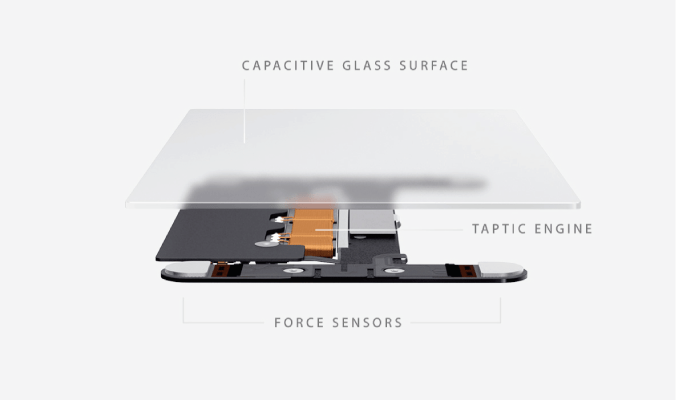
I believe that the future application of haptic technology is an unchartered/unexplored territory. The implications lie within Gaming, Aerospace Simulation, Medical, Telecom Industry, and perhaps E-Commerce as well. Imagine a future where your customer can “feel” the texture of a Shirt on sale on your website. A future where textures like fabric, sand and water on could be felt on your touchscreen. Haptics is a territory where future advancements may create new industries that were previously not feasible nor realistic.
 Farzan Chishti - Creative for a Living